Water Bodies_Re-Inhabiting Oslofjorden
A series of participatory gatherings at Sukkerbiten, connecting ocean health, human health, and community. We gather by the water for communal knitting, dance, and conversations on creative conservations, rethinking the boundaries between land and sea, body and environment, human and more-than-human perspectives.
Join us 31. Mai, as part of Oslo Art Weekend.
We invite you to a co-creative knitting workshop. Here you can contribute to the shared textile work Dancing Habitat – a collective artistic call for a healthier and cleaner Oslofjord. Guided by Marea, the work will later be lowered into the sea, where it will become a habitat for tunicates and mussels. It will continue as a co-creation with the fjord before becoming part of the underwater film and performance Dancing Habitat.
Knit for Wildlife presents its Vega cohort: 5 knitters translating seabird decline into contemporary knitwear. Visitors can join the launch of #BirdColonyKAL and help build a digital seabird colony.
The programme includes a performance by Ellinor Ødegård Staurbakk, with and in Alanis Thorney’s work living knitwear. The project invites us to rethink boundaries between land and sea, body and environment, and human and more-than-human perspectives.
Alanis Thorney
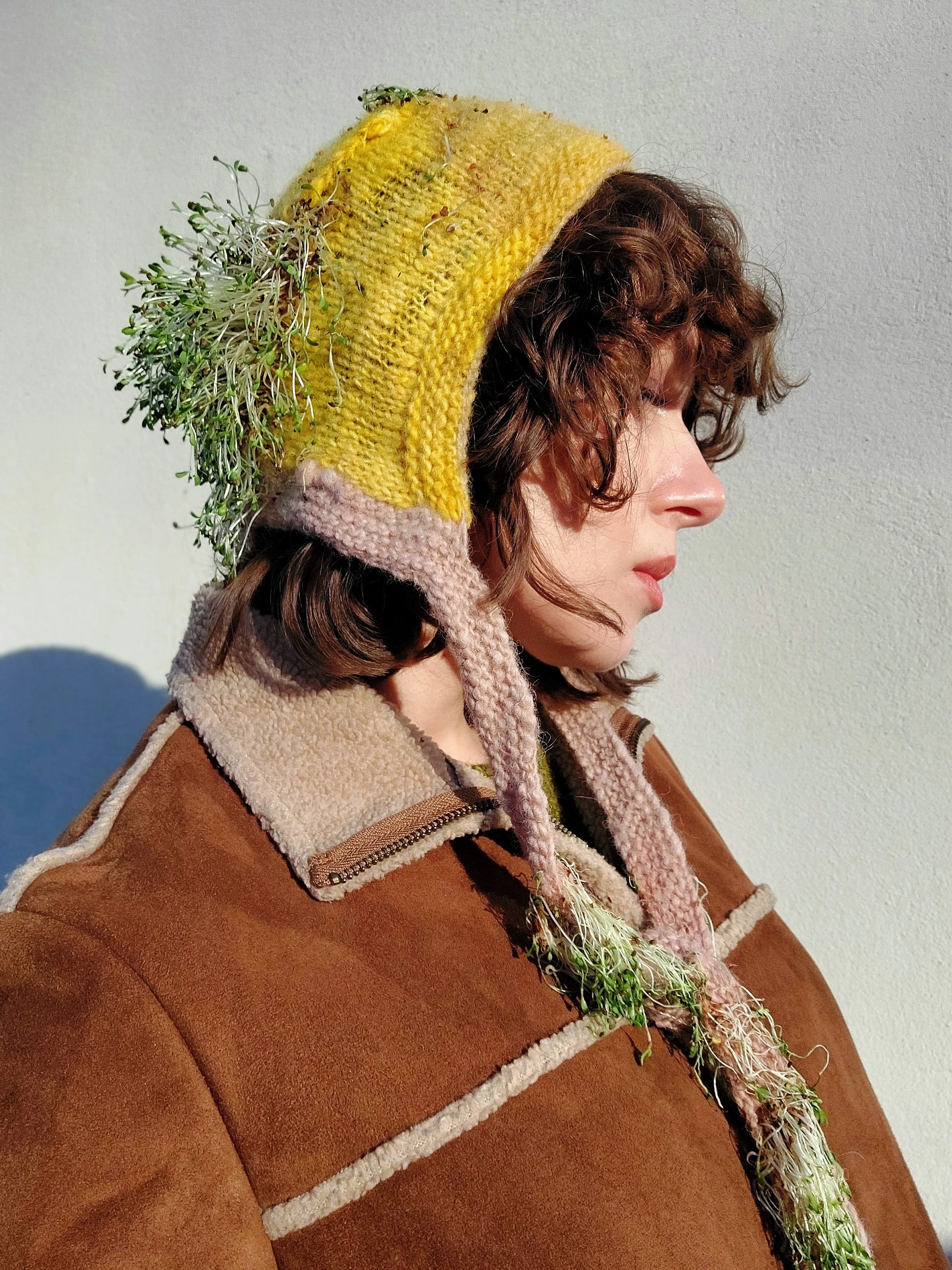
Alanis Thorney is a Shropshire-based fibre artist known for her work with ‘living knitwear’ which she first developed during her Master’s Degree in Sustainable Fashion with Falmouth University, for which she was awarded a Distinction. Through this speculative concept, she explores the life within wool as a part of the natural world and its ability to form part of a soil-to-soil system. Moreover, her work acknowledges the many human and more-than-human stories embedded into our clothing. As well as these stories, her work documents the various stages involved in crafting a living knitwear garment including; wool processing, spinning, natural dyeing and hand-knitting. Through her work she hopes to make transparent the life captured in our clothing.
Ellinor Staurbakk
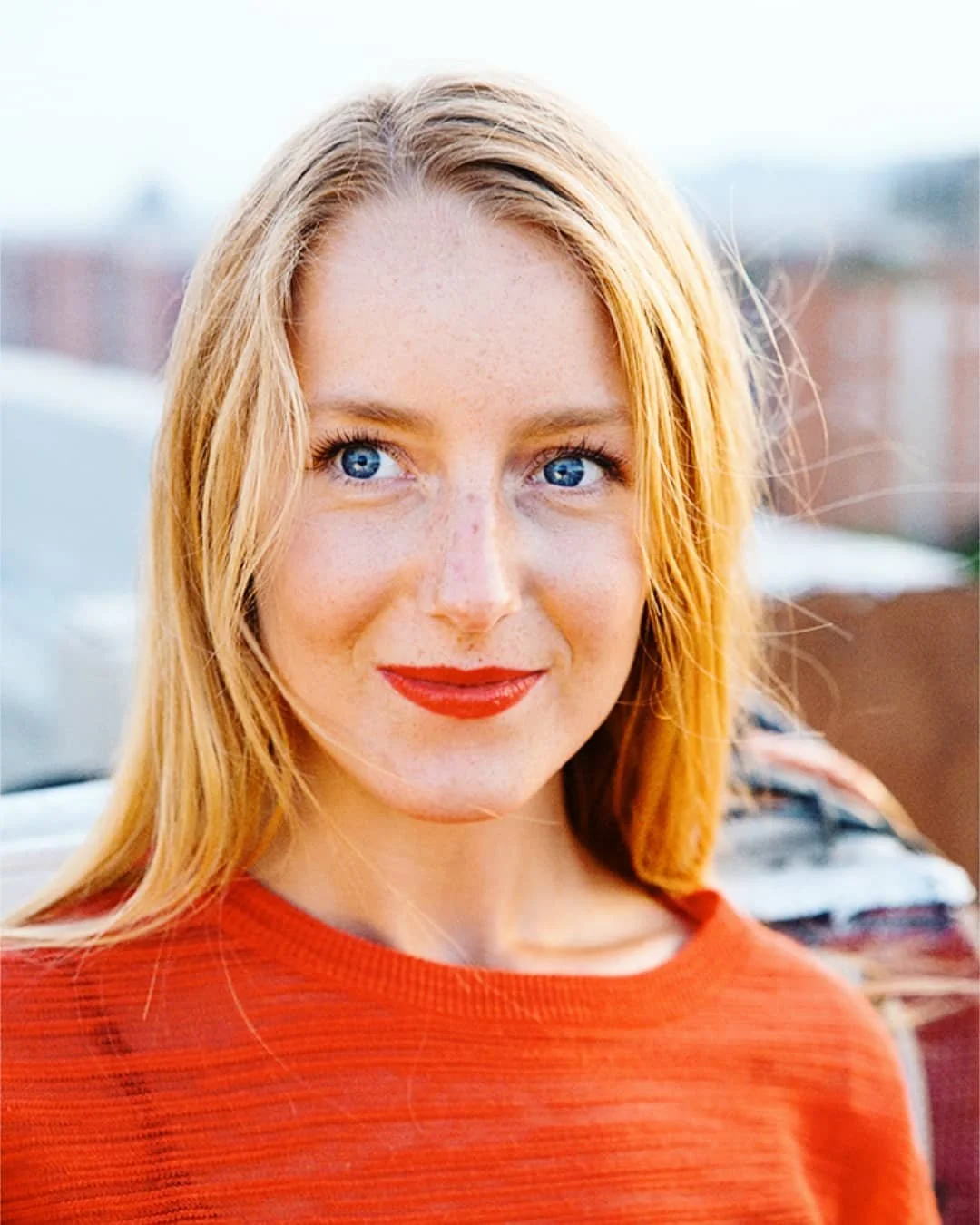
Ellinor Staurbakk er danser, koreograf og fallskjermhopper fra Engeløya i Nordland. Hun er utdannet danser ved Institute of the Arts Barcelona (BA) og London Contemporary Dance School (MA). Ellinor jobber som frilans dansekunstner både nasjonalt og internasjonalt, og skaper egne verk i tillegg til å opptre for andre, blant annet Russell Maliphant (UK), Riccardo Buscarini (IT), Igor and Moreno (ES), Alleyne Dance (UK), Pan.Optikum (GE) og Panta Rei Danseteater (NO), blant flere.
Hun startet Ærlig Talt Produksjoner, som hadde urpremiere på forestillingen EKKO – Hymne til fjellet under Bodø Biennale 2024, en samproduksjon med Stormen Konserthus og Bodø 2024. Staurbakk er sterkt inspirert av naturen og oppveksten i Nord-Norge. Som kunstner er hun nysgjerrig og liker å utfordre grensene for bevegelse i samspill med ulike naturfenomener. Dette har blant annet ført til prosjekter som Beyond Body - Mer enn mennesket, der hun bruker fallskjermhopping og dykking som koreografiske verktøy.
Ellinor er dypt engasjert i scenekunst i Arktis, og er nå inne i sitt femte år som nestleder i Forum for nordnorske dansekunstnere. Hun har vært plukket ut til fleretalentprogrammer og er for tiden en del av talentprogrammet Folk Sessions Kvääni i regi av Karhutanssi Dance Company, Talent Norge og Riksscenen.
Knit for Wildlife
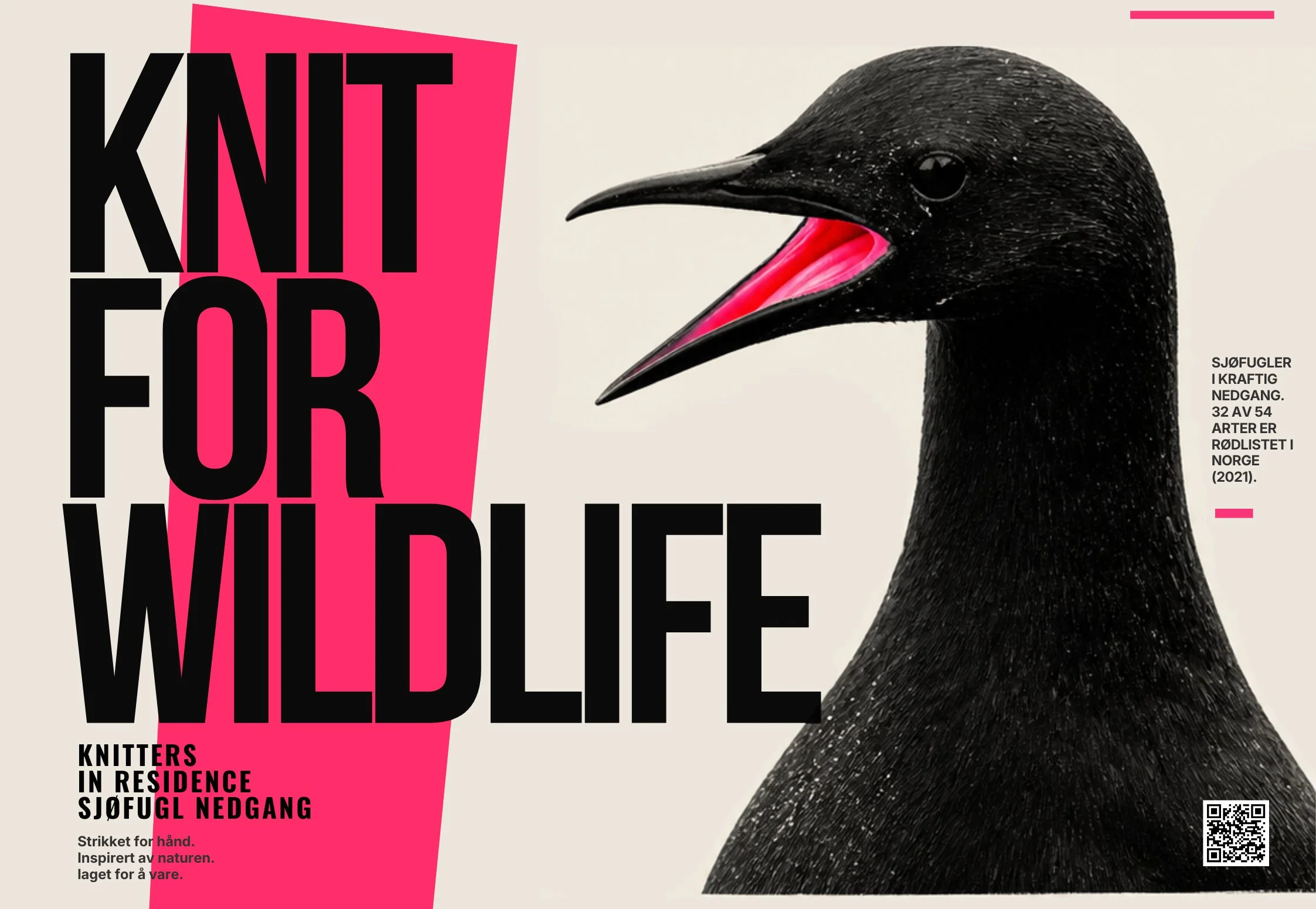
Knit for Wildlife is an official activity of the UN Ocean Decade. We translate stories about vulnerable nature and wildlife into bold, raw knitting patterns. Through knitting needles, we build “wildlife literacy” in a completely new way. We take research out of reports and bring it straight into everyday life and popular culture.
The driving force behind Knit for Wildlife is our Knitters in Residence. This spring’s group makes up the “Vega Cohort.” They have taken the Vega World Heritage Area and the critical decline in seabird populations as their starting point. These stories have been translated into raw, open-access patterns for bird-guardian sweaters, shawls, beanies, and eider duck tees.
We invite you to take an active part in the project through our knitalong, #BirdColonyKAL. We’re kicking off the action at Sukkerbiten on 31 May together with Libby Bush! Here, we’ll be knitting seabirds, including unique bag charms based on Dominika’s design.
To show where each species stands on the Norwegian Red List, we incorporate specific red details into the pattern.
Read more about the artists and Knit for Wild life: https://knitforwildlife.org
Creature Conserve:
Growing Art-Sci Pathways for Wildlife Conservation
Wildlife populations are declining around the world because of human impacts. We are all part of this problem, yet too few of us are part of the solution. At Creature Conserve our foundational belief is that the arts, informed, inspired, and prompted by science, have the power to direct our attention to the ongoing loss of species and what we can do about it.
Our mission is to grow a creative community that combines art with science to cultivate new pathways for wildlife conservation. We envision a more inviting and inclusive approach, open to diverse perspectives from the arts, humanities, sciences, traditional ecological knowledge, and beyond. Our programs (our plan) bring together artists, designers, writers, and experts with scientific and traditional knowledge in a supportive, welcoming space to learn about threats to wildlife, share empathy for animals, exchange ideas, and find opportunities for growth at the intersection of art and science. Our strategy is to support creatives as they take bold new steps to explore the collaborative art-sci process and get involved in wildlife conservation.
Art, science and conversations on creative conservation.
Re-Inhabiting Oslofjorden explores the relationship between ocean health and human health—physical, mental, and social. The project aims to create shared spaces for reflection and dialogue around the Oslofjord as a living system, and to examine how cultural and creative practices, in meeting with science and more-than-human perspectives, can contribute to more connected and responsible forms of conservation.
The project is grounded in the concept of re-inhabiting, where re-inhabitation is understood as learning to live again in a place that has been damaged by industrial exploitation and political decision-making. In this context, re-inhabiting means understanding place as an extension of our own bodies, cultures, and collective well-being.
It is intended for a broad public audience, including local communities, environmental organizations, artists, scientists, activists, and policymakers. It brings together workshops and communal making, site-responsive performance, film screenings, photography, visual art, food culture from the fjord and conversations, offering multiple entry points for engagement.
Through shared experiences and dialogue, the project invites participants to reflect on conservation as a lived, relational practice and to explore how we might re-inhabit the fjord together.
The Oslofjord’s near-collapse functions as a warning of what could unfold along Norway’s coastline if extractive trajectories continue—for example through decisions that expand high-impact industries such as deep-sea mining.
Re-Inhabiting Oslofjorden is a Creature Conserve Curatorial Fellowship project led and designed by Ingrid Styrkestad.